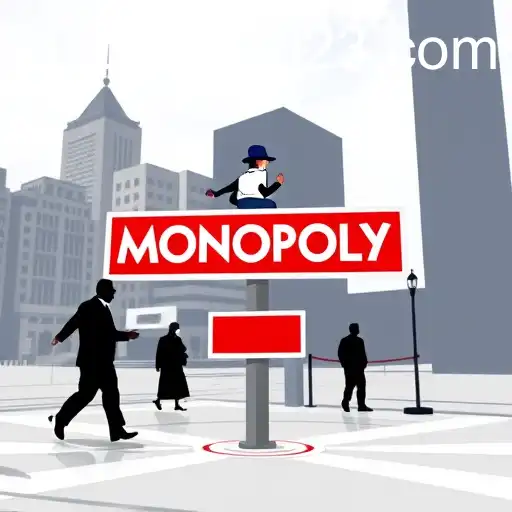
Understanding the Dynamics of Monopoly
The term monopoly often evokes images of towering corporations dominating an industry or market. In economic terms, a monopoly exists when a specific person or enterprise is the only supplier of a particular good or service. This monopoly power can have significant impacts on market dynamics, pricing strategies, and consumer choices.
The Features of a Monopoly
One of the key features of a monopoly is the lack of economic competition for the goods or services that the monopoly provides. This singular control over the market grants the monopoly significant pricing power, allowing it to dictate prices at levels that would not be possible in a competitive market. In many cases, monopolies can lead to higher prices and reduced options for consumers.
Another characteristic is the presence of barriers to entry. These barriers can be the result of high initial costs, stringent regulations, or significant technological advancements that are hard for newcomers to replicate. This makes it difficult for other firms to enter the market and compete against the monopoly, thereby sustaining its market power.
Why Monopolies Form
Monopolies can form for several reasons. One common cause is through legal patents that protect a firm's product or innovation for a specific time period. This legal protection ensures that other companies cannot use the patented technology or process, giving the patent holder a temporary monopoly.
Monopolies might also emerge through mergers and acquisitions, where a company buys out or merges with competitors in the industry, significantly consolidating market control. Moreover, government regulations, such as licenses granted to a single entity, can also induce monopoly conditions in certain sectors, like public utilities.
The Impact of Monopoly on Consumers and Markets
The control exerted by monopolies can lead to both positive and negative impacts on consumers and markets. On one hand, monopolies benefit from economies of scale, producing large quantities at lower costs due to the volume. This can sometimes lead to lower pricing if efficiency gains are passed on to consumers.
However, the primary concern is that monopolies can choose to set higher prices since there is no competition driving competitive pricing. This can negatively affect consumers who have no choice but to pay higher prices for essential goods or services. Additionally, the lack of competition can lead to stagnation in innovation, as there is little pressure to improve products or reduce costs.
Strategies to Overcome Monopoly Challenges
To mitigate the adverse practices of monopolies, several strategies can be employed. Governments can implement regulatory measures to monitor and control prices or service conditions. Laws such as anti-trust legislation are created specifically to prevent anti-competitive practices and allow new entrants into the market.
Diversification and innovation by companies can also help to break monopoly power. By creating unique products or services, firms can differentiate themselves and compete on quality versus price, attracting consumers looking for alternatives.
Strategic Insights from 'win2023 PH Login'
The concept of 'win2023 PH Login' can metaphorically represent strategic advancements in overcoming monopolies. By employing innovative digital platforms, companies can not only create new market spaces but also enhance customer engagement through personalized services and interactive experiences.
Adopting a 'win2023' mindset involves leveraging technology to disrupt traditional models. It encourages businesses to explore digital transformation aggressively, ensuring that they are not only participants in the market but active leaders driving the change. This can include expanded online presence, digital payment options, or interactive customer service platforms that enhance brand loyalty.
Conclusion
While monopolies pose challenges, understanding their dynamics and employing strategic responses can offer opportunities for businesses to thrive. 'Win2023 PH Login' exemplifies how embracing technological change can lead to market breakthroughs, driving both competition and consumer satisfaction. For more insights on how to navigate business challenges, visit our homepage.